A) increased silt load
B) sand filling
C) sewage disposal
D) industrial effluent
Show Answer
The correct answer is B .
A) Massive rice importations
B) Intensive peasant farming
C) Low birth and death rates
D) Fast-growing heavy industries
Show Answer
The correct answer is B .
A) Peru
B) Alaska
C) New Guinea
D) Japan
E) Mali
Show Answer
The correct answer is E .
Which one of the following countries has an export trade which is dominated by a single mineral?
Options:A) Central Africa Empire
B) Uganda
C) Kenya
D) Zambia
E) Mozambique
Show Answer
The correct answer is D .
An example of a rock formed by wood subjected to pressure and heat is
Options:A) sandstone
B) lignite
C) biotite
D) granite
Show Answer
The correct answer is B .
A) Egypt
B) Zimbabwe
C) Angola
D) Tanzania
Show Answer
The correct answer is C .
A) hydrophytes
B) mesophytes
C) xerophytes
D) sporophytes
Show Answer
The correct answer is C .
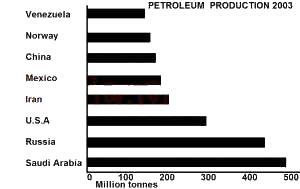
If the total production of petroleum is estimated to be 201 million tonnes, what is the approximate percentage of the production by the USA?
Options:A) 12%
B) 14%
C) 16%
D) 18%
Show Answer
The correct answer is B .
A) road
B) transport
C) labour
D) capital
Show Answer
The correct answer is B .
A) light intensities
B) water supply
C) temperatures
D) soil salinity
Show Answer
The correct answer is B .